Blue Springs, MO Emergency Roof Tarping & Tree Impact Securement
Located in eastern Jackson County along the Interstate 70 corridor, Blue Springs features established neighborhoods, lakeside properties around Lake Tapawingo and Blue Springs Lake, and wooded properties near Burr Oak Woods Conservation Area. Mature hardwood trees and open eastern prairie wind sweeps make Blue Springs particularly vulnerable to falling limbs, rafter punctures, and wind-peeled eave shingles during severe derecho events.
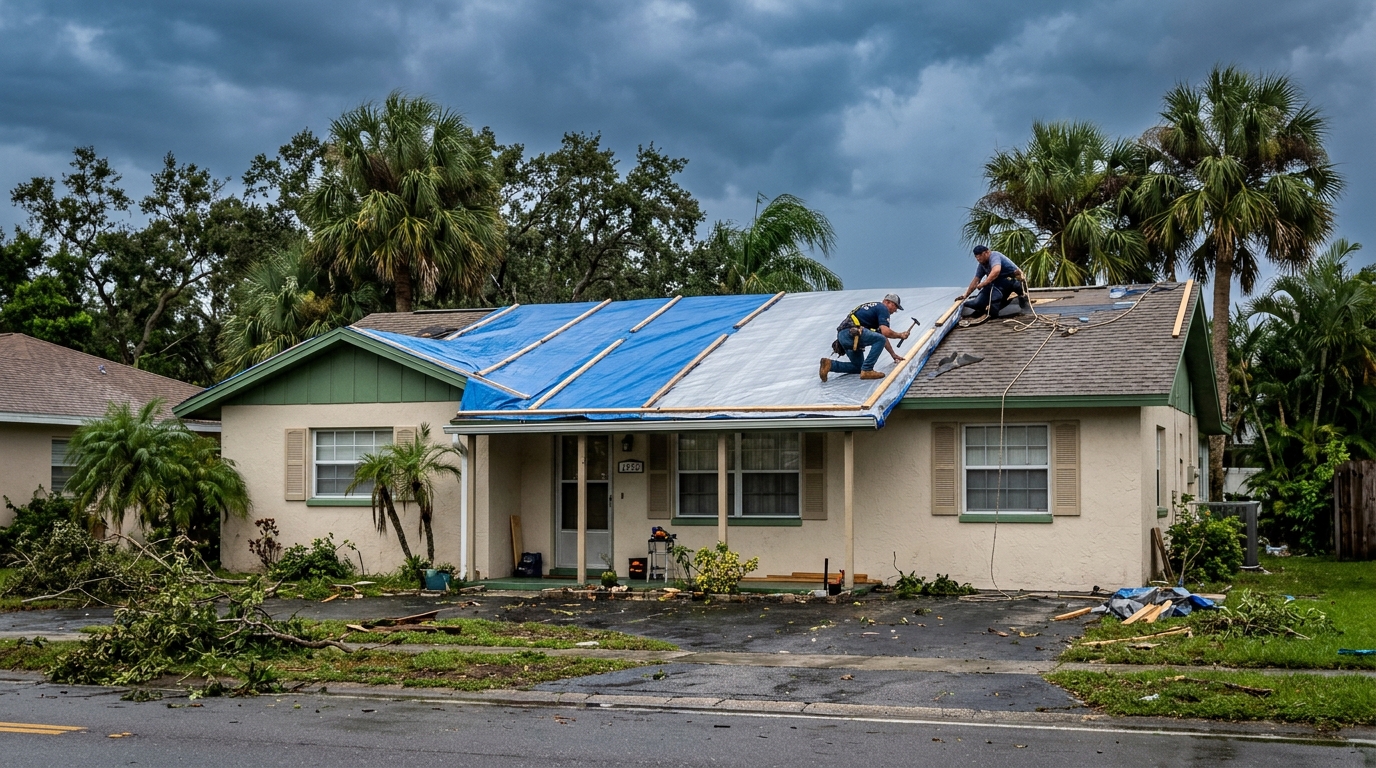
Localized Microclimate & Repair Protocols • Blue Springs, MO
- Municipal Building Codes: Rigorous compliance with local residential codes, high-wind fastening mandates, and municipal ice barrier rules.
- Direct Dispatch Routing: On-call certified roofing crews stationed across the metro for immediate deployment to Blue Springs, MO.
- Non-Destructive Moisture Scopes: High-resolution FLIR thermal infrared cameras to map ceiling moisture without destructive teardowns.
- Engineered Emergency Tarping: Heavy-duty 10-mil woven poly tarps secured with exterior 2x4 kiln-dried timber battens and gasketed screws.
1. Microclimate Dynamics & Severe Storm Exposure in Blue Springs, MO
Properties in Blue Springs, MO occupy a geographically demanding sector of the greater Kansas City metropolitan area. Exposed to the turbulent atmospheric boundary layer of the Missouri River Valley and the open prairie plains of western Missouri and eastern Kansas, the community endures intense thermal swings, severe convective supercells, and seasonal freeze-thaw damming.
During severe spring weather, rotating storm fronts create extreme microburst winds with horizontal velocity pressures exceeding 70 to 85 mph. Concurrently, Hail Alley convective dynamics drop hailstones exceeding 1.50 inches in diameter, causing severe mechanical impact damage to asphalt shingles, flashing assemblies, and low-slope membranes. In winter months, freeze-thaw cycles create heavy ice dams that force meltwater backward into attic soffits and ceiling drywall.
Local topographies in Blue Springs, MO, ranging from exposed lakefront shorelines and ridge crests to heavily canopied residential streets, further amplify wind funnels. When strong convective winds hit unshielded gables and eaves, negative pressure suction can peel back older 3-tab or improperly nailed laminated shingles in cascading strips, exposing bare wood sheathing to torrential downpours.
2. Architectural Assemblies & Structural Roofing Vulnerabilities
The housing stock across Blue Springs, MO features varied architectural styles that present distinct waterproofing challenges under severe weather:
- Steep-Pitch Architectural Shingle Roofs: Common on suburban executive residences, multi-gable rooflines require extensive valley flashing and continuous ice-barrier membranes. When hail strikes steep slopes obliquely, granule loss is concentrated along windward facets, requiring forensic angle-of-fall inspections.
- Low-Slope Residential Additions & Porches: Transition zones between steep main roof planes and low-slope porches or sunrooms often suffer water damming when standard shingles are improperly installed on pitches below 4:12 without self-adhering modified bitumen underlayments.
- Chimney Chases & Siding Intersections: Vertical wood or masonry wall intersections require custom-bent step and counter flashings. Dried-out mastic or rusted sheet metal allows wind-driven rain to infiltrate wall cavities unseen.
- Commercial Flat Assemblies (TPO/EPDM): Strip malls and office buildings throughout Blue Springs, MO require rapid puncture triage when wind-blown rooftop HVAC panels or tree branches penetrate single-ply synthetic membranes.
3. Non-Destructive Moisture Diagnostics & FLIR Thermal Tracing in Blue Springs, MO
Locating the true entry point of a roof leak after a severe storm in Blue Springs, MO requires scientific precision. Water rarely penetrates directly above an interior ceiling stain; it travels along top plates, trusses, and ceiling drywall joints before emerging. Rushing into invasive demolition of finished ceilings causes unnecessary structural damage and inflated repair costs.
Contractors dispatched through Roof Expert USA utilize calibrated FLIR infrared thermal cameras to scan ceilings, attics, and exterior roof perimeters. Because moisture-saturated insulation and framing timbers retain latent thermal energy differently than surrounding dry materials, infrared cameras clearly pinpoint the hidden moisture trail. Non-invasive moisture meters verify saturation percentages to document conclusive forensic proof for insurance adjusters.
In addition to thermal imaging, technicians set up calibrated 10'x10' test squares across affected slopes to document hail impact density, measuring the number of fractured shingle cores and dented metal vents per 100 square feet to support comprehensive property insurance scopes.
4. Step-by-Step Substrate Restoration Methodology & Engineering Controls
Restoring damaged roofs in Blue Springs, MO demands systematic engineering controls:
- Emergency Stabilization: Deploying OSHA-compliant fall protection and installing 10-mil poly tarps battened with 2x4 lumber to stop immediate water intrusion.
- Substrate Deck Evaluation: Inspecting underlying CDX plywood or OSB sheathing for delamination or fungal decay, replacing damaged decking with code-compliant structural panels.
- Ice & Water Barrier Protection: Installing self-adhering polymer modified bitumen membranes extending from eaves inward at least 24 inches past the warm wall boundary.
- Flashing & Valley Weaving: Precision fabrication of 26-gauge galvanized steel step flashings, valley liners, and masonry counter-flashings to ensure continuous gravity drainage.
- High-Wind Fastening: Utilizing six-nail fastening schedules per shingle tab to guarantee 110-130 mph wind uplift resistance under local building code mandates.
- Comprehensive Clean-Up & Magnetic Sweeping: Conducting multiple magnetic roller sweeps across driveways, lawns, and flower beds to capture all stray roofing nails and sharp debris.
5. Municipal Building Codes & Contractor Licensing in Blue Springs, MO
All roofing repairs and reroofing installations in Blue Springs, MO must adhere strictly to municipal and county building codes governing wind resistance, ice dam underlayment, and ventilation. Residential structures are governed by the International Residential Code (IRC) with local county amendments.
Specific municipal requirements include ASTM D7158 Class H wind-resistant shingles rated up to 130 mph, Class 4 impact resistance where applicable for insurance premium discounts, and full drip edge installation along all perimeter edges.
Independent contractors dispatched through Roof Expert USA carry required municipal licenses, statutory workers' compensation insurance, and comprehensive commercial general liability coverage, ensuring that your home and property are fully protected throughout the restoration process.
6. Preventative Property Maintenance & Severe Storm Preparedness
Homeowners in Blue Springs, MO can protect their property value and avoid sudden roof failures by taking preventative maintenance measures:
- Trim Large Overhanging Branches: Prune mature hardwood branches back at least 8 to 10 feet from rooflines to prevent mechanical abrasion and limb strikes.
- Clean Gutters and Downspouts: Ensure clear drainage before storm seasons to prevent backflow and winter ice dam formation.
- Inspect Pipe Boots and Sealants: Check rubber vent collars and chimney flashing caulks annually, replacing degraded boots before storm leaks develop.
- Schedule Pre-Storm Visual Assessments: Partner with a trusted local professional to identify missing tabs or loose flashings before major weather strikes.
- Maintain Clear Attic Ventilation: Keep soffit intake baffles unblocked by loose insulation to maintain proper thermal airflow and stop heat accumulation that triggers winter ice damming.
Need Immediate Emergency Roof Assistance in
Zero web forms. Zero delayed emails. Connect directly with an on-call emergency intake coordinator serving Blue Springs, MO: